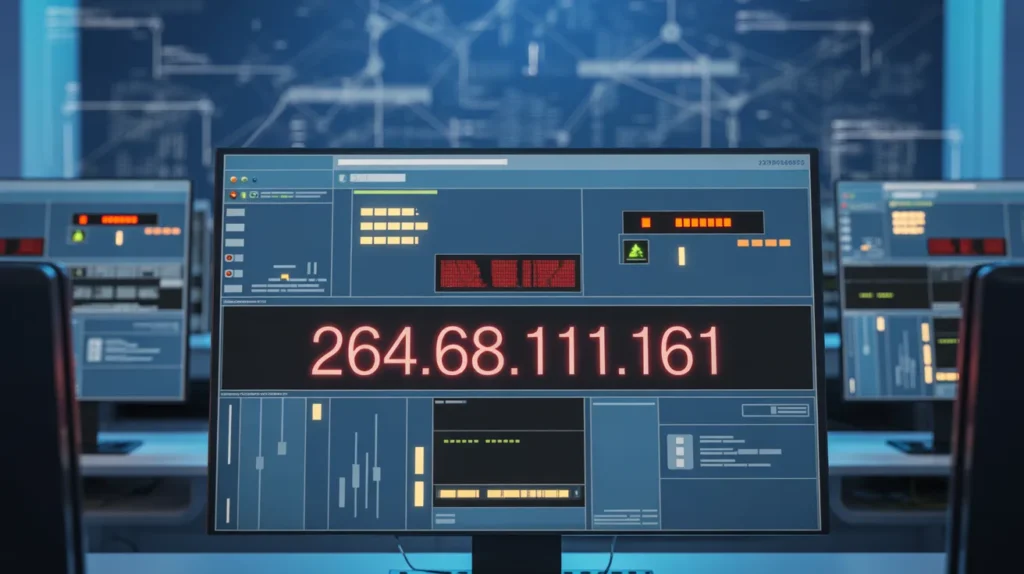

264.68.111.161 stands out as an intriguing example in the world of networking, often sparking curiosity among tech enthusiasts and professionals alike when it pops up in logs or discussions. While it mimics the structure of a standard IP address, a closer look reveals layers of technical nuance that highlight broader principles in digital communication and security.
Understanding the Basics of IP Addresses
To grasp what makes 264.68.111.161 noteworthy, start with the fundamentals of IP addressing. Every device connected to the internet or a local network gets assigned an IP address, which acts like a digital postal code for routing data packets efficiently. The most common type, IPv4, uses a format of four numbers separated by dots, each ranging from 0 to 255. This limitation stems from the binary nature of computing, where each segment, or octet, represents eight bits, capping at 255.
264.68.111.161 follows this dotted format, but it breaks the rules right from the first octet. The number 264 exceeds the maximum allowable value, rendering the entire address invalid under IPv4 standards. This invalidity isn’t just a minor glitch; it prevents any real-world routing or connection. Devices and routers simply discard such addresses, as they don’t conform to the protocols governing global networks. For those delving into networking, recognizing patterns like 264.68.111.161 helps in troubleshooting and understanding why certain configurations fail.
Beyond basics, IP addresses fall into categories like public and private. Public ones are visible on the internet, while private ones, such as those starting with 192.168 or 10, stay within local networks. 264.68.111.161 doesn’t fit neatly into either, emphasizing its role as an anomaly rather than a functional identifier.
Why 264.68.111.161 Is Considered Invalid
Diving deeper, the invalidity of 264.68.111.161 boils down to octet constraints. Each octet in an IPv4 address must be an integer between 0 and 255 because that’s the range expressible in eight bits. Anything higher, like the 264 here, signals an error in generation or interpretation. This could arise from software bugs, where a program mistakenly calculates or parses a value outside bounds, or from deliberate testing scenarios where developers simulate edge cases.
In practice, encountering 264.68.111.161 often points to misconfigurations. For instance, in server setups, an incorrect input during address assignment might produce such a string. Network administrators frequently see these in diagnostic tools, where they serve as red flags for deeper issues. The remaining octets—68, 111, and 161—are perfectly valid on their own, but one flawed component invalidates the whole, much like a single wrong digit in a phone number.
This concept extends to broader networking protocols. Organizations managing IP allocations, through structured hierarchies, ensure addresses stay within limits to maintain order. When something like 264.68.111.161 appears, it disrupts that order, though fortunately, built-in validations in modern systems prevent widespread problems.
Common Scenarios Where 264.68.111.161 Appears
264.68.111.161 doesn’t just exist in theory; it shows up in real-world contexts, often unexpectedly. In server logs, for example, it might log as an attempted connection from malformed traffic. Analytics platforms sometimes capture it when processing data from proxies or bots that generate invalid headers. Developers use similar invalid addresses during software testing to verify how applications handle errors, ensuring robustness before deployment.
Another frequent spot is in security alerts. Firewalls and intrusion detection systems flag 264.68.111.161 because it doesn’t match expected patterns, potentially indicating scanning activities or automated probes. In email headers or spam filters, it could appear as a spoofed source, where malicious actors try to disguise their origins. While not inherently harmful, repeated sightings of 264.68.111.161 warrant investigation, as they might correlate with larger patterns of suspicious behavior.
In educational settings, 264.68.111.161 serves as a teaching tool. Instructors break it down to explain octet limits, contrasting it with valid examples to illustrate why adherence to standards matters. This practical application helps learners appreciate the precision required in digital infrastructure.
Potential Risks Associated with 264.68.111.161
Though 264.68.111.161 itself poses no direct threat—since it can’t route traffic—its appearance can signal underlying risks. In cybersecurity, invalid addresses like this often tie to phishing attempts. Scammers might include 264.68.111.161 in emails claiming “suspicious activity from this IP,” urging recipients to click links or provide credentials. Recognizing this tactic is crucial; always verify claims through official channels rather than reacting impulsively.
On the technical side, if 264.68.111.161 floods logs, it could indicate botnets or scripts testing vulnerabilities. These probes might precede more serious attacks, like denial-of-service efforts that overwhelm resources. For network admins, ignoring such anomalies risks missing early warnings. Additionally, in data pipelines, persistent invalid entries like 264.68.111.161 can skew analytics, leading to misguided decisions based on faulty inputs.
Mitigating these risks involves proactive measures. Implement input validation in applications to reject out-of-range values early. Use monitoring tools to track patterns, alerting on spikes in invalid traffic. For individuals, tools like VPNs can mask real IPs, reducing exposure, while keeping software updated patches known flaws that might generate or exploit such errors.
Best Practices for Handling Invalid IPs Like 264.68.111.161
When 264.68.111.161 or similar shows up, don’t panic—approach it methodically. First, verify the context: Is it in a log, email, or alert? Cross-check with tools like ping or traceroute, which will fail for invalid addresses, confirming non-existence. For logs, review surrounding entries for patterns, such as user agents or timestamps that might reveal the source.
Adopt validation routines in your systems. In programming, use libraries that enforce octet limits when handling IP strings. For networks, configure firewalls to log but not overreact to isolated invalid attempts, focusing instead on rate-limiting suspicious sources. Education plays a key role; train teams to spot anomalies like 264.68.111.161 and understand their implications without unnecessary alarm.
Transitioning to IPv6 offers long-term benefits, as its expanded format reduces the chances of such simple invalidities. However, even there, proper implementation is essential. Regularly audit configurations to catch bugs that might produce 264.68.111.161 equivalents in newer protocols.
| Aspect | Valid Example | Invalid Example (e.g., 264.68.111.161) | Key Difference |
|---|---|---|---|
| Octet Range | 0-255 per segment | First octet 264 > 255 | Exceeds binary limit |
| Routing | Packets delivered successfully | Discarded by routers | No real-world connectivity |
| Common Cause | Proper assignment | Software error or test case | Miscalculation or simulation |
| Risk Level | Low if secured | Potential indicator of probes | Signals possible malice |
| Handling Tip | Monitor normally | Validate and investigate patterns | Focus on context |
This table summarizes practical distinctions, aiding quick assessments.
The Role of 264.68.111.161 in Education and Testing
In training environments, 264.68.111.161 exemplifies edge cases. Cybersecurity courses use it to teach about input sanitization, where failing to check ranges can lead to vulnerabilities. Developers simulate scenarios with 264.68.111.161 to test error-handling code, ensuring applications gracefully reject bad data without crashing.
Honeypots—decoy systems designed to lure attackers—might log interactions with invalid addresses like 264.68.111.161 to study threat behaviors. This data informs better defenses, turning anomalies into valuable insights. For aspiring network engineers, dissecting 264.68.111.161 builds intuition for diagnosing real issues, from misconfigured DHCP servers to faulty scripts.
Future Implications and Evolving Networks
As networks evolve, addresses like 264.68.111.161 remind us of IPv4’s limitations, pushing adoption of IPv6 with its vast address space. Future systems might incorporate smarter validations, automatically flagging and correcting invalid entries. AI-driven monitoring could predict patterns involving 264.68.111.161, enhancing proactive security.
In an increasingly connected world, understanding these quirks ensures resilience. Whether in cloud environments or IoT setups, recognizing invalid IPs prevents minor issues from escalating.
In wrapping up, 264.68.111.161 serves as a gateway to deeper networking knowledge. Its invalid nature underscores the importance of standards, while its appearances highlight vigilance in security. By applying these insights, users can navigate digital landscapes more confidently, turning potential puzzles into opportunities for growth.